"title": "Advanced Techniques in DevSecOps Integration",
"author": "Kumar Abhishek",
"checksum": "0x139F09",
"date": "2025-12-28",
"tags": [ "advanced", "best-practices", "development", "technology", "tutorial" ]
}
Advanced Techniques in DevSecOps Integration
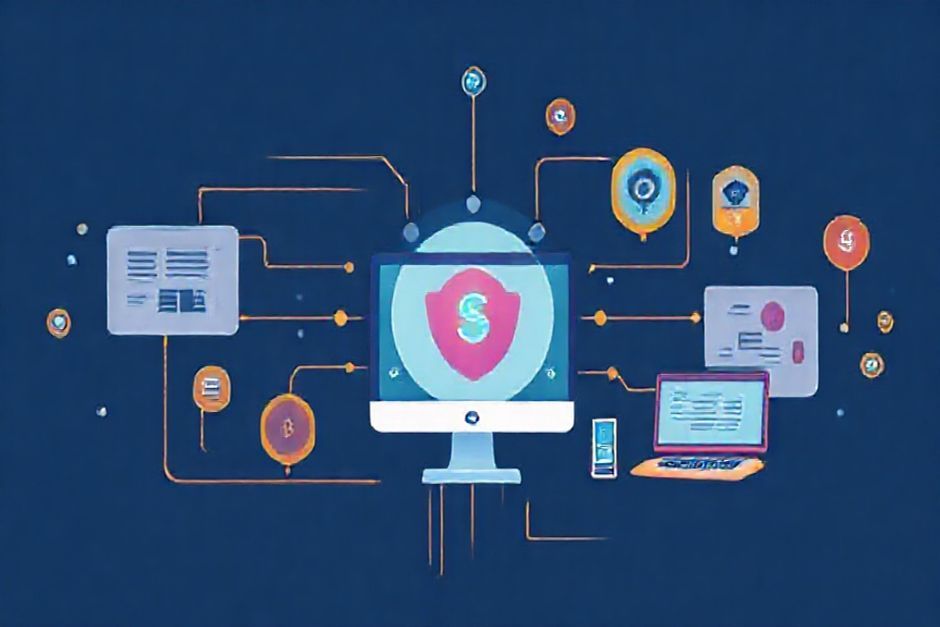
ntroduction: The Evolution of the "Security Bottleneck"
In the early days of DevOps, security was often treated as a "gate" at the end of the delivery cycle—a final checkbox that frequently resulted in last-minute rollbacks and friction between teams. As we transition into the era of cloud-native architectures and microservices, the "Shift Left" movement has become the industry standard. However, for senior software engineers and architects at kabhishek18.com, "shifting left" is just the starting point.
True Advanced DevSecOps Integration is not about running more scanners; it is about building a self-healing, autonomous security fabric. It involves moving from static security checks to dynamic, policy-driven automation that lives in the kernel, the container, and the cloud provider simultaneously. This guide explores the sophisticated methodologies required to transform security into a competitive advantage.
1. Architectural Strategy: Moving to Policy-as-Code (PaC)
The most significant advancement in modern DevSecOps is the transition from manual security reviews to Policy-as-Code. By decoupling security logic from application code, we can manage security requirements with the same rigor as our infrastructure.
The Rise of OPA (Open Policy Agent)
Open Policy Agent (OPA) has emerged as the de facto standard for PaC. Using a declarative language called Rego, engineers can write fine-grained policies that apply across the entire stack—from Kubernetes admission control to API authorization.
Why it’s advanced: Unlike traditional RBAC (Role-Based Access Control), OPA allows for context-aware decisions. For example, you can write a policy that says: "A developer can only deploy to Production if the code has passed a CRDA scan and the deployment happens during business hours."
Example: Kubernetes Admission Control Policy (Rego)
package kubernetes.admission

import data.kubernetes.modules

deny[msg] {
    input.request.kind.kind == "Pod"
    container := input.request.object.spec.containers[_]
    # Check if the image comes from a trusted registry
    not re_match("^[registry.kabhishek18.com/](https://registry.kabhishek18.com/).+", container.image)
    msg := sprintf("Image '%v' comes from an untrusted registry.", [container.image])
}
2. Deep Supply Chain Security: SBOMs and SLSA
The modern application is 80% third-party libraries. If your DevSecOps strategy only scans your own code, you are missing 80% of the attack surface.
The Software Bill of Materials (SBOM)
Advanced teams now generate and sign an SBOM for every build. Think of an SBOM as a nutritional label for your software, listing every transitive dependency, license, and version.
Implementing SLSA Framework
The SLSA (Supply-chain Levels for Software Artifacts) framework provides a security checklist to prevent tampering and improve integrity.
-
Level 1: Documentation of the build process.
-
Level 3: Hardened build environments and non-falsifiable provenance (proving the code in Production is exactly what was built in the CI).
Implementation Tip: Use tools like Syft to generate SBOMs and Cosign to sign your container images. If a signature doesn't match in the Kubernetes cluster, the deployment is automatically blocked.
3. The "No-Long-Lived-Secrets" Mandate
Hardcoded secrets are a junior-level mistake. Using a Vault is the professional standard. But the advanced standard is Dynamic Secret Management.
Dynamic Secret Rotation with HashiCorp Vault
Instead of storing a static database password that lasts for months, advanced DevSecOps pipelines leverage Dynamic Secrets.
-
Request: An application pod requests access to a PostgreSQL database.
-
Generation: Vault talks to the database and creates a unique, temporary user with limited permissions.
-
Lease: The app receives the credentials with a TTL (Time-to-Live) of 60 minutes.
-
Revocation: After 60 minutes, Vault automatically deletes the user from the database.
This architecture ensures that even if a pod is compromised, the attacker only has a very narrow window of opportunity before the credentials expire.
4. Runtime Intelligence: eBPF and the Kernel Layer
Traditional security tools (like WAFs) sit at the edge. They see traffic, but they don't see intent. Advanced DevSecOps leverages eBPF (Extended Berkeley Packet Filter) to gain deep observability into the Linux kernel.
Observability with Falco and Cilium
By using eBPF, we can monitor system calls in real-time without adding latency to the application.
-
Falco: Detects anomalous behavior (e.g., a container suddenly opening a shell, or a process attempting to read
/etc/shadow). -
Cilium: Provides identity-aware networking. Instead of IP-based firewalls, you create policies based on Kubernetes labels.
Scenario: A web server container is exploited via an RCE (Remote Code Execution). The attacker tries to install nmap to scan the internal network. An eBPF-based tool like Falco detects the execve system call for an unauthorized binary and immediately kills the container.
5. DevSecOps in GitOps Workflows
For teams using ArgoCD or Flux, security must be integrated into the GitOps reconciliation loop. This is known as GitOps Security.
The Reconciliation Security Loop
In a GitOps model, the "Source of Truth" is the Git repository.
-
Pre-Commit: Use
pre-commithooks to runtrufflehog(searching for secrets) andcheckov(scanning IaC). -
Sync-Time: The GitOps controller (ArgoCD) runs an OPA check before syncing the manifest to the cluster.
-
Continuous Audit: A controller constantly compares the live state of the cluster against the Git state. If a manual change is made (Drift), the system alerts the security team and auto-reverts the change.
6. Measuring Maturity: Security DORA Metrics
You cannot improve what you do not measure. Senior leadership at kabhishek18.com looks at these key indicators of DevSecOps health:
|
Metric |
Description |
Target for Elite Teams |
|---|---|---|
|
Vulnerability MTTR |
Mean Time to Remediate a Critical CVE. |
< 24 Hours |
|
False Positive Rate |
Percentage of alerts that developers ignore. |
< 10% |
|
Deployment Gate Failures |
How often security blocks a build (indicates feedback loop speed). |
Decreasing over time |
|
SCA Coverage |
Percentage of microservices with a verified SBOM. |
100% |
7. Cultivating the "Security Champion" Culture
No amount of tooling can replace a security-conscious engineering team.
-
The Security Champions Program: Identify one engineer in every squad to be the "Security Champion." They receive specialized training and act as the first line of defense during design docs and PR reviews.
-
Gamification: Run internal "Capture the Flag" (CTF) events using your own staging environment to teach developers how attackers think.
Conclusion: The Path to Autonomous Security
Advanced DevSecOps is a journey from reactive scanning to proactive platform engineering. By implementing Policy-as-Code, securing the supply chain with SBOMs, and leveraging kernel-level observability via eBPF, you build a system that is secure by design and resilient by default.
For the modern engineer, security is no longer a separate task—it is a core component of high-quality software craftsmanship.
Suggested Internal Links for kabhishek18.com:
-
Related Article: Mastering Kubernetes Networking with Cilium and eBPF
-
Related Project: Building a Secure CI/CD Pipeline with GitHub Actions and HashiCorp Vault
-
Case Study: How We Reduced Vulnerability Remediation Time by 60% Using OPA

Kumar Abhishek
I’m Kumar Abhishek, a high-impact software engineer and AI specialist with over 9 years of delivering secure, scalable, and intelligent systems across E‑commerce, EdTech, Aviation, and SaaS. I don’t just write code — I engineer ecosystems. From system architecture, debugging, and AI pipelines to securing and scaling cloud-native infrastructure, I build end-to-end solutions that drive impact.